
Artificial intelligence is advancing at a speed that even seasoned technology professionals find remarkable. Only a few years ago, chatbots were widely seen as one of the most practical applications of AI. They helped businesses automate repetitive conversations, answer frequently asked questions, and provide basic customer support around the clock. At that time, simply having an automated chat interface on a website felt innovative. However, as we move deeper into 2026, the AI landscape has evolved far beyond simple conversational tools, giving rise to a new and far more powerful concept: AI agents.
In our experience working with tech content, businesses, and emerging AI use cases, one of the biggest sources of confusion today is the assumption that chatbots and AI agents are essentially the same thing. While both rely on artificial intelligence and often use similar underlying models, their purpose, capabilities, and impact are fundamentally different. Chatbots are typically reactive systems. They wait for a user prompt and respond based on predefined rules, trained data, or scripted flows. AI agents, on the other hand, are proactive and goal-oriented. They can plan actions, make decisions, interact with multiple systems, and execute tasks with minimal human guidance.
By our research and observation of real-world implementations, this distinction is not just technical—it directly affects business outcomes. Many organizations adopt chatbots when they actually need intelligent agents, or invest in complex agent systems when a simple chatbot would suffice. This mismatch often leads to wasted resources, poor user experiences, and unmet expectations. In our opinion, understanding the difference early can save companies months of development time and significant costs.
Another important shift we have noticed is how accessibility has changed. With the rise of Low-code and No-code platforms, both chatbots and AI agents are no longer limited to hardcore developers. Non-technical users can now build conversational bots or deploy simple agents using visual workflows. However, even with these tools, the conceptual gap remains. A chatbot built with a No-code platform is still a chatbot—it does not suddenly gain autonomy or reasoning abilities just because it was easy to create.
This in-depth guide is designed to remove that confusion once and for all. Based on our experience, hands-on research, and analysis of current AI trends, we will clearly break down Chatbots vs AI Agents, explain seven powerful differences, and help you decide which technology truly fits your needs in 2026 and beyond. Whether you are a beginner exploring AI for the first time or an intermediate user planning strategic adoption, this article aims to provide clarity, confidence, and practical insight—without hype, jargon, or misleading claims.
Table of Contents
What Is a Chatbot?
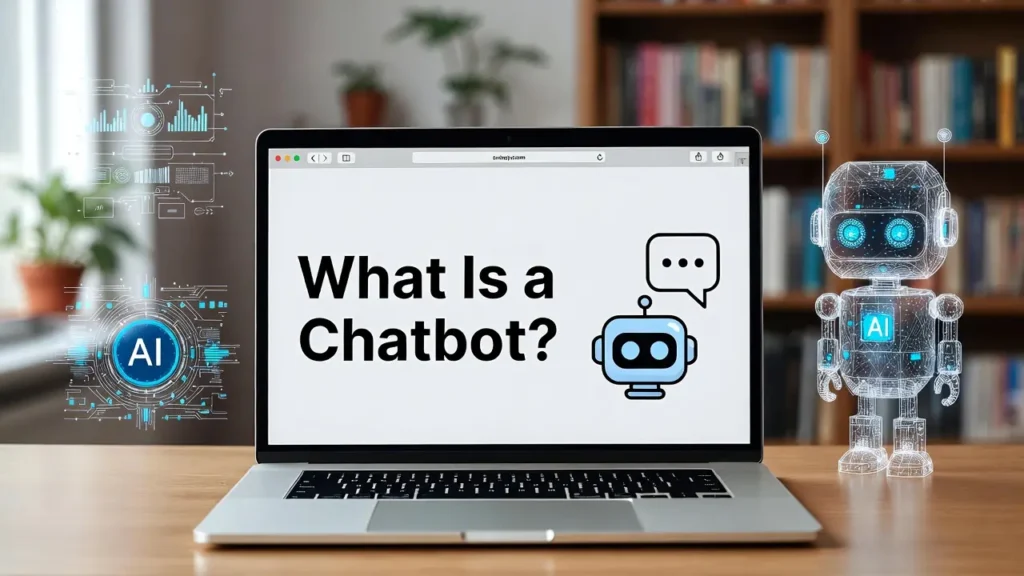
A chatbot is an artificial intelligence–driven software application created to simulate human conversation through text or voice-based interactions. Its core role is to communicate with users in a natural, conversational manner and provide relevant responses to questions, requests, or commands. In our opinion, chatbots act as the first layer of interaction between users and digital systems, reducing the need for constant human involvement while improving response speed and availability. From our experience working with various websites and platforms, a well-designed chatbot can significantly enhance user engagement by offering instant assistance at any time of day.
How Chatbots Work (In Simple Terms)
At a fundamental level, chatbots operate by receiving user input, analyzing it, and delivering an appropriate response. Traditional chatbots rely on predefined rules, scripts, and decision trees. These systems work best when questions follow a predictable pattern. More advanced chatbots integrate Natural Language Processing (NLP) and machine learning models, allowing them to understand intent, context, and variations in human language. By our research, modern chatbots trained on large datasets can generate more natural, human-like replies, although they remain largely reactive—responding only when prompted by user input. Many organizations today deploy chatbots using Low-code and No-code platforms, making development faster and more accessible without deep programming expertise.
Common Use Cases of Chatbots
Based on our real-world observations, chatbots are widely used in customer support, website live chat, appointment scheduling, lead qualification, and basic technical troubleshooting. They perform exceptionally well in handling repetitive, structured tasks that require quick and consistent responses. In our experience, this allows human teams to focus on more complex, high-value interactions while chatbots manage routine inquiries efficiently and reliably.
What Is an AI Agent?
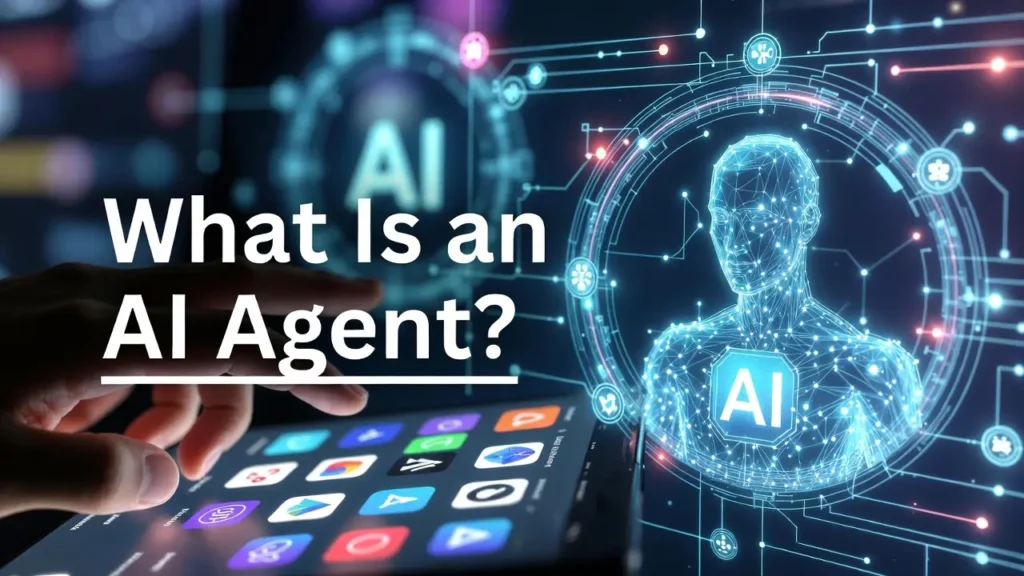
An AI agent is a highly advanced form of artificial intelligence designed to operate with a level of autonomy that goes far beyond traditional conversational systems. Unlike basic AI tools that wait for instructions, an AI agent can perceive its environment, interpret information, make decisions, plan multiple steps ahead, and execute actions independently in order to achieve a defined objective. In our opinion, this shift from simple response-based AI to action-oriented intelligence represents one of the most important changes in how software systems are being designed in 2026.
By our experience studying real-world implementations, AI agents behave more like digital workers than chat interfaces. They are not restricted to conversations alone. Instead, they can interact directly with tools, APIs, databases, cloud platforms, internal software systems, and even collaborate with other AI agents. This means an AI agent can analyze data, trigger workflows, update records, generate reports, or coordinate tasks across multiple platforms without continuous human input. From our research perspective, this capability is what truly separates AI agents from chatbots.
How AI Agents Work
At a structural level, AI agents are built using several interconnected components that allow them to function intelligently and autonomously. Most agents include a reasoning or decision-making engine that evaluates situations and chooses appropriate actions. They also rely on memory systems—both short-term memory for handling current tasks and long-term memory for learning from past interactions and outcomes.
Another defining feature is goal-setting. AI agents are designed to work toward specific objectives rather than simply responding to prompts. Tool and API integration allows them to act within real software environments, while feedback loops enable continuous improvement based on results. In simple terms, an AI agent does not just answer questions—it observes, decides, and acts.
Even though Low-code and No-code platforms have made it easier to deploy basic agents, by our experience, the intelligence of an AI agent comes from its architecture and logic, not from how quickly it can be built.
Common Use Cases of AI Agents
In practical applications, AI agents are increasingly used for complex, multi-step processes. Common use cases include automated business workflows, AI-powered software development assistance, autonomous research and data analysis, task orchestration across multiple tools, and highly personalized digital assistants.
From our observation, AI agents are best suited for scenarios where tasks require planning, adaptability, and decision-making over time. They are not designed for simple conversations, but for handling complexity at scale—making them a powerful solution for organizations looking beyond basic automation in 2026 and beyond.
Chatbots vs AI Agents: 7 Powerful Differences Explained
To truly understand the difference between chatbots and AI agents in 2026, the most important distinction to grasp is how each system approaches intelligence and action. Based on our experience working with AI-driven content and real-world use cases, this single factor often determines whether a solution succeeds or falls short of expectations.
1. Reactive vs Proactive Intelligence
Chatbots: Reactive by Nature
Chatbots are fundamentally reactive systems. They are designed to wait for a user’s input and then respond according to predefined logic, trained language patterns, or conversational rules. In simple terms, a chatbot does nothing unless someone interacts with it. If a user asks a question, the chatbot replies. If there is no input, there is no output—no initiative, no independent action.
Even modern chatbots powered by advanced language models still follow this reactive pattern. They may sound intelligent and human-like, but by our research, they are responding to prompts rather than pursuing objectives. In our opinion, this behavior is not a weakness—it is a design choice. Reactive systems are predictable, controlled, and ideal for structured environments like customer support, FAQs, and onboarding flows.
From our experience, this is also why chatbots are widely adopted through Low-code and No-code platforms. Businesses can easily build and deploy them without worrying about unintended actions. The chatbot stays within its conversational boundaries and performs exactly as instructed.
For example:
- You ask a question → the chatbot replies
- No input → no action
AI Agents: Proactive and Goal-Driven
AI agents operate on an entirely different level. Instead of waiting passively for instructions, they are designed to pursue goals. Once an objective is defined, the agent can decide what steps are required, which tools to use, and how to execute the task—often without ongoing human involvement.
For example, if an AI agent is given the goal of analyzing competitors and generating a report, it does not wait for follow-up questions. By our experience observing agent-based systems, it will collect relevant data, identify trends, compare insights, generate summaries, and deliver the final output autonomously. This proactive behavior is what makes AI agents feel more like digital workers than conversational tools.
Key Difference Explained
By our research and practical observation, the core difference is clear and consistent across use cases: chatbots respond, while AI agents act. Chatbots are ideal when you need controlled, predictable conversations. AI agents are better suited for complex, multi-step tasks that require planning, initiative, and execution. Understanding this distinction is critical when choosing the right AI solution in 2026 and beyond.
2. Task Complexity Handling
Chatbots: Simple and Structured Tasks
Chatbots are highly effective when tasks are clear, repetitive, and follow a predictable structure. In our experience working with businesses, websites, and customer-facing platforms, chatbots consistently deliver the best results when user intent is narrow and the expected responses can be predefined or generated within a limited conversational scope. This is why chatbots are most commonly used for answering FAQs, providing product or service details, handling basic support queries, and guiding users through simple workflows such as form submissions or booking processes.
By our research, these tasks share an important characteristic: they do not require deep reasoning, long-term memory, or complex decision-making. A chatbot processes an input, matches it to an intent, and returns the most relevant response. In our opinion, this simplicity is a major advantage. Chatbots are predictable, easy to control, and safe to deploy at scale because they stay within clearly defined boundaries.
However, this same strength also creates limitations. Chatbots struggle when tasks involve planning multiple steps ahead, remembering context across long interactions, or coordinating actions across different tools and systems. From our experience, once a task goes beyond a linear conversation—such as needing to analyze data, make conditional decisions, or interact with multiple software platforms—the chatbot begins to break down or require heavy human intervention.
Even though Low-code and No-code platforms have made it easier than ever to build and deploy chatbots, the underlying capability remains the same. These tools simplify development, but they do not turn chatbots into autonomous problem-solvers. By our observation, expecting chatbots to handle complex workflows often leads to poor user experiences and unmet expectations. Chatbots are at their best when they are used exactly where they belong: structured, low-complexity tasks that demand speed and consistency.
AI Agents: Complex, Multi-Step Tasks
AI agents are specifically designed to handle complexity. Unlike chatbots, they are capable of breaking large objectives into smaller, manageable steps and deciding the correct sequence of actions needed to achieve a goal. In our experience analyzing agent-based systems, this ability to plan and adapt is what makes AI agents fundamentally different.
AI agents can use external tools, APIs, databases, and software systems as part of their workflow. For example, an agent tasked with generating a business report can gather data from multiple sources, analyze trends, create summaries, and deliver insights without constant guidance. By our research, this makes AI agents particularly well-suited for enterprise-level and automation-heavy use cases.
In our opinion, AI agents are not designed to replace chatbots—they solve a different class of problems. While chatbots simplify conversations, AI agents simplify complex operations. Understanding this distinction is essential for choosing the right AI solution in 2026, especially as organizations move toward more intelligent and autonomous systems.
3. Memory and Context Awareness
Chatbots: Limited Context Retention
One of the most noticeable differences between chatbots and AI agents lies in how they handle memory and context. In our experience working with chatbot-based systems, most chatbots are designed to remember information only within a single conversation session. They can follow the flow of a discussion while the session is active, but once the interaction ends, that contextual understanding is usually lost unless the data is manually stored in an external system.
By our research, this limitation directly affects personalization. A chatbot may understand what you asked a few messages ago, but it typically cannot remember your preferences, past issues, or behavior across multiple visits. For example, a chatbot might help a user choose a product today, but when the same user returns next week, the chatbot often starts from scratch. In our opinion, this makes chatbots feel efficient but impersonal.
This design is intentional. Chatbots are built to handle high volumes of short, transactional interactions rather than long-term relationships. From our experience, this approach works well for customer support, FAQs, and quick assistance, where long-term memory is not essential. However, it becomes a drawback in scenarios that require continuity, learning, or adaptation over time.
Even with modern platforms that use Low-code and No-code tools to add basic data storage, the chatbot itself does not truly “learn” from past interactions. It can retrieve stored information, but it does not naturally adapt its behavior based on experience. This is why chatbots often deliver the same responses repeatedly, regardless of how user needs evolve.
AI Agents: Persistent and Adaptive Memory
AI agents take a fundamentally different approach to memory and context awareness. In our experience analyzing agent-based systems, AI agents are designed with both short-term and long-term memory components. Short-term memory allows the agent to manage ongoing tasks, track intermediate steps, and maintain context throughout complex workflows. Long-term memory, on the other hand, stores user preferences, historical actions, and past outcomes.
By our research, this persistent memory enables AI agents to improve over time. An agent can remember what worked previously, adjust its strategies, and deliver increasingly personalized results. For example, a digital assistant agent can learn a user’s habits, preferred tools, or communication style and adapt future actions accordingly.
In our opinion, this ability to retain and use context across interactions is what makes AI agents feel intelligent rather than reactive. While chatbots reset, AI agents evolve. This makes them especially valuable in automation-heavy and enterprise environments, where learning from past behavior is critical for long-term efficiency and better outcomes in 2026 and beyond.
4. Tool and System Integration
Chatbots: Minimal Integration
Chatbots are capable of integrating with external systems, but their level of integration is usually limited and tightly controlled. In our experience working with chatbot deployments across websites and business platforms, most chatbots connect to tools such as CRM systems, helpdesk software, booking platforms, or basic APIs to fetch or update information. These integrations allow chatbots to perform simple actions like checking order status, creating a support ticket, or pulling customer details.
By our research, the key limitation is that these integrations are almost always predefined. The chatbot follows fixed rules that determine when and how an external system is accessed. For example, if a user asks about a support issue, the chatbot may trigger a specific API call to log a ticket—but only in the exact way it was programmed to do. In our opinion, this makes chatbots safe and predictable, which is often desirable in customer-facing environments.
However, this predictability also restricts flexibility. Chatbots cannot dynamically decide which tool to use or how to combine multiple systems to solve a problem. From our experience, if a task requires interacting with more than one platform, adapting to unexpected data, or choosing between different tools based on context, chatbots quickly reach their limits. Even when built using Low-code and No-code platforms that simplify integration setup, the chatbot still operates within strict boundaries defined at design time.
As a result, chatbots are best suited for environments where integrations are simple, repetitive, and well-understood. They extend existing workflows but do not fundamentally change how systems interact.
AI Agents: Deep Tool Orchestration
AI agents take system integration to a completely different level. Unlike chatbots, AI agents are designed to orchestrate tools dynamically based on goals rather than fixed rules. In our experience studying agent-based architectures, AI agents can decide which APIs to call, when to access databases, how to use browsers, and even when to run code—all as part of a single task.
By our research, this deep integration capability is what makes AI agents truly powerful. An AI agent can coordinate multiple tools in sequence, pass information between them, and adjust its approach based on results. For example, an agent might gather data from a database, validate it through an API, analyze it using code, and present insights—all without human intervention.
In our opinion, this ability transforms AI agents from simple assistants into autonomous operators. While chatbots incrementally improve existing processes, AI agents fundamentally reshape workflows by connecting systems in intelligent ways. This makes them especially valuable in enterprise environments and automation-heavy use cases in 2026, where efficiency depends on seamless coordination across complex digital ecosystems.
5. Decision-Making Capability
Chatbots: Scripted or Model-Based Responses
Chatbots are designed to respond, not to decide. In our experience working with conversational AI systems, most chatbots generate their outputs based on either prewritten scripts or statistical predictions made by language models. When a user asks a question, the chatbot identifies intent and delivers the most appropriate response from its available options. This process may appear intelligent, but by our research, it is fundamentally reactive rather than evaluative.
Traditional chatbots rely heavily on scripts and rules. If a user follows an expected path, the chatbot performs well. More modern chatbots use trained models to predict likely responses, which makes conversations feel more natural. However, even in these cases, the chatbot is not weighing alternatives or choosing between strategies. In our opinion, it is simply selecting a response that best matches the input pattern.
From our experience, this approach works extremely well in structured environments such as customer service, onboarding flows, and information delivery. Chatbots are consistent, fast, and safe because they operate within clearly defined boundaries. They do not question objectives or adjust goals; they only respond to what is asked. This predictability is often a requirement in regulated or customer-facing systems.
Although Low-code and No-code platforms have made chatbot creation more accessible, they do not change this core behavior. These tools simplify how responses are built and managed, but the chatbot still lacks genuine decision-making capability. It cannot independently assess a situation, evaluate trade-offs, or select an optimal path forward beyond its predefined logic.
AI Agents: Autonomous Decision-Making
AI agents introduce a fundamentally different approach. Instead of responding to inputs alone, AI agents are designed to make decisions. In our experience analyzing agent-based systems, AI agents evaluate multiple factors before acting, including available options, system constraints, historical data, and desired outcomes.
By our research, this decision-making process allows AI agents to choose the most effective course of action rather than simply following a script. For example, an AI agent managing a workflow can decide which task to prioritize, which tool to use, or when to adjust its strategy based on changing conditions. This level of autonomy makes AI agents particularly valuable for automation, optimization, and strategic operations.
In our opinion, this is one of the most powerful differences between chatbots and AI agents. Chatbots deliver answers; AI agents deliver outcomes. While chatbots improve communication efficiency, AI agents improve operational efficiency. As organizations in 2026 increasingly seek systems that can adapt, optimize, and act independently, autonomous decision-making becomes a defining advantage of AI agents.
6. Learning and Adaptability
Chatbots: Limited Learning
One of the most important differences between chatbots and AI agents becomes clear when we examine how they learn and adapt over time. In our experience working with chatbot-driven systems, most chatbots do not improve on their own. Their performance remains largely the same unless developers manually update their scripts, retrain their models, or add new rules. This means any improvement depends heavily on human intervention rather than real-world outcomes.
By our research, chatbots are typically trained on a fixed dataset or a predefined set of conversational patterns. Once deployed, they respond based on that existing knowledge. If users start asking new questions, using different language, or expecting more advanced behavior, the chatbot does not automatically adjust. In our opinion, this makes chatbots reliable but rigid. They are excellent at repeating what they already know, but they do not naturally evolve.
From our experience, this limitation is not always a drawback. In stable environments where user behavior rarely changes—such as basic customer support or FAQ handling—limited learning can actually be beneficial. The chatbot remains consistent and predictable. Even when built using Low-code and No-code platforms that simplify updates, the learning process itself is still manual. Someone must analyze failures, update logic, and redeploy the chatbot for improvements to take effect.
AI Agents: Continuous Improvement
AI agents approach learning in a fundamentally different way. Instead of relying solely on manual updates, AI agents are designed to learn from outcomes and adapt their behavior over time. In our experience studying adaptive AI systems, this continuous improvement loop is one of the defining features that separates agents from traditional chatbots.
AI agents can evaluate the results of their actions, identify what worked and what did not, and adjust future strategies accordingly. By our research, this allows agents to improve efficiency, accuracy, and decision-making without constant human supervision. For example, an AI agent managing a marketing workflow can analyze campaign results, refine targeting strategies, and optimize performance over time.
In our opinion, this adaptability is critical in fast-changing environments such as finance, marketing, and cybersecurity, where conditions evolve daily. Threats change, user behavior shifts, and data patterns fluctuate. AI agents can respond to these changes dynamically, while chatbots remain static unless updated.
While Low-code and No-code tools may simplify deployment, the true strength of AI agents lies in their ability to learn, adapt, and improve continuously. From our experience, this makes AI agents far more suitable for long-term, high-impact automation in 2026 and beyond.
7. Business Impact and ROI
Chatbots: Cost-Effective Efficiency
From a business perspective, chatbots are widely adopted because they deliver quick and measurable returns with relatively low investment. In our experience working with organizations of different sizes, chatbots are often one of the first AI tools introduced to improve operational efficiency. Their primary value lies in reducing support costs, minimizing response times, and handling large volumes of repetitive customer interactions without requiring additional human staff.
By our research, chatbots are particularly well-suited for small to medium businesses that need to scale customer support without significantly increasing overhead. They can manage frequently asked questions, basic service requests, and standard interactions 24/7, ensuring customers receive instant responses. In our opinion, this immediate availability directly improves user satisfaction while freeing human teams to focus on more complex issues.
Chatbots also offer predictable ROI. Implementation is relatively straightforward, especially with the availability of Low-code and No-code platforms that allow businesses to deploy conversational systems quickly. Maintenance costs remain low because chatbots do not require constant supervision or complex retraining. From our experience, this makes them ideal for high-volume, low-complexity interactions where efficiency and consistency are more important than adaptability.
However, the impact of chatbots is mostly incremental. They optimize existing processes rather than redefining them. While they save time and money, they rarely change how a business fundamentally operates.
AI Agents: Strategic Business Transformation
AI agents, in contrast, deliver a deeper and more strategic level of business impact. In our experience analyzing enterprise-level AI adoption, AI agents are not just efficiency tools—they are transformation enablers. They automate entire workflows, coordinate tasks across systems, and support data-driven decision-making at scale.
By our research, AI agents enable organizations to scale productivity without scaling headcount. They can handle complex operations such as cross-department automation, intelligent analysis, and continuous optimization. This allows businesses to move faster, reduce errors, and uncover insights that would be difficult to achieve manually.
In our opinion, while AI agents require a higher initial investment in terms of design, integration, and governance, the long-term return on investment is significantly greater—especially for complex operations. Over time, AI agents can reduce operational friction, improve strategic outcomes, and create sustainable competitive advantages.
From our experience, the choice is clear: chatbots offer quick wins, while AI agents offer long-term transformation. Understanding this difference is essential for businesses planning AI adoption in 2026 and beyond.
Chatbots vs AI Agents: Comparison Table
| Feature | Chatbots | AI Agents |
|---|---|---|
| Interaction Type | Conversational | Action-oriented |
| Intelligence | Reactive | Proactive |
| Task Complexity | Low to Medium | High |
| Memory | Short-term | Short-term + Long-term |
| Tool Usage | Limited | Extensive |
| Decision Making | Minimal | Autonomous |
| Best For | Support & FAQs | Automation & Strategy |
Which One Should You Choose in 2026?
Choosing between chatbots and AI agents in 2026 is less about which technology is “better” and more about which one aligns with your actual goals, resources, and long-term vision. Based on our experience analyzing industry adoption patterns and real-world deployments, many businesses make the mistake of choosing technology first and strategy later. In our opinion, reversing that approach leads to far better outcomes.
Choose Chatbots If:
- You need quick customer support
- Your tasks are repetitive
- Budget is limited
- You want fast deployment
Choose AI Agents If:
- You want automation at scale
- Your workflows are complex
- You need intelligent decision-making
- Long-term efficiency matters
In many modern systems, businesses are combining both—using chatbots as interfaces and AI agents as the engine behind the scenes.
Real-World Examples (Simple Explanation)
- Chatbot Example:
A common and familiar example of a chatbot is a website assistant that answers customer questions about shipping, returns, or refund policies. In our experience working with e-commerce and service-based websites, these chatbots are usually placed in the bottom corner of a webpage and activate when a visitor types a question. The chatbot identifies keywords, understands intent, and responds with a predefined or generated answer. - AI Agent Example:
An AI agent example looks very different. Imagine a system that continuously monitors sales data across multiple channels, analyzes purchasing trends, predicts future inventory requirements, places restocking orders automatically, and notifies relevant stakeholders when action is taken. In our experience analyzing automation-heavy systems, this is where AI agents truly shine.
In our opinion, this highlights the strategic difference. Chatbots improve communication efficiency. AI agents improve operational intelligence. While both are valuable, they serve entirely different roles. Understanding this difference helps businesses choose the right solution—and avoid costly misalignment—in 2026 and beyond.
Future of Chatbots and AI Agents
From our research, chatbots are not disappearing. Instead, they are evolving into front-end interfaces for AI agents.
By 2026 and beyond:
- Chatbots will handle conversations
- AI agents will handle reasoning and execution
This hybrid approach will dominate AI-driven systems.
FAQs: Chatbots vs AI Agents
1. Are AI agents better than chatbots?
AI agents are more powerful, but chatbots are better for simple tasks. The “better” option depends on your use case.
2. Can chatbots evolve into AI agents?
Yes. Many modern systems are upgrading chatbots with agent-like capabilities.
3. Are AI agents expensive?
Initially, yes. However, their long-term ROI often outweighs the cost.
4. Do AI agents replace human workers?
In our opinion, AI agents augment human work rather than fully replace it.
5. Are chatbots still relevant in 2026?
Absolutely. They remain essential for customer interaction and support.
Conclusion: Final Thoughts
Chatbots and AI agents serve different purposes, even though they share common AI foundations. Chatbots focus on communication, while AI agents focus on execution and intelligence.
If you understand these 7 powerful differences, you can make smarter decisions—whether you are building a product, running a business, or simply learning about AI.
In real-world usage, the future belongs not to chatbots or AI agents alone, but to systems that intelligently combine both.
Pingback: 11 Best high-Income Freelancing Skills for Tech Professionals